
What Probate Covers in Winona County
Probate in Winona County is the District Court process for handling wills, estates, guardianships, conservatorships, and related transfers after death. The Minnesota Judicial Branch says probate is the legal process of getting court authority to transfer property after death, and the personal representative is the person appointed by the court to administer the estate. That makes probate a court case type, not a recorder or vital-records task.
The county's District Court has original jurisdiction over probate matters in Winona County, and the case type is usually searchable in MCRO by PR case number or by party name when the case is public. The same courthouse also handles other civil, family, criminal, juvenile, and traffic matters, which is why probate belongs in the trial-court record set instead of a separate office.
The probate help topic is here: Minnesota Judicial Branch probate help.
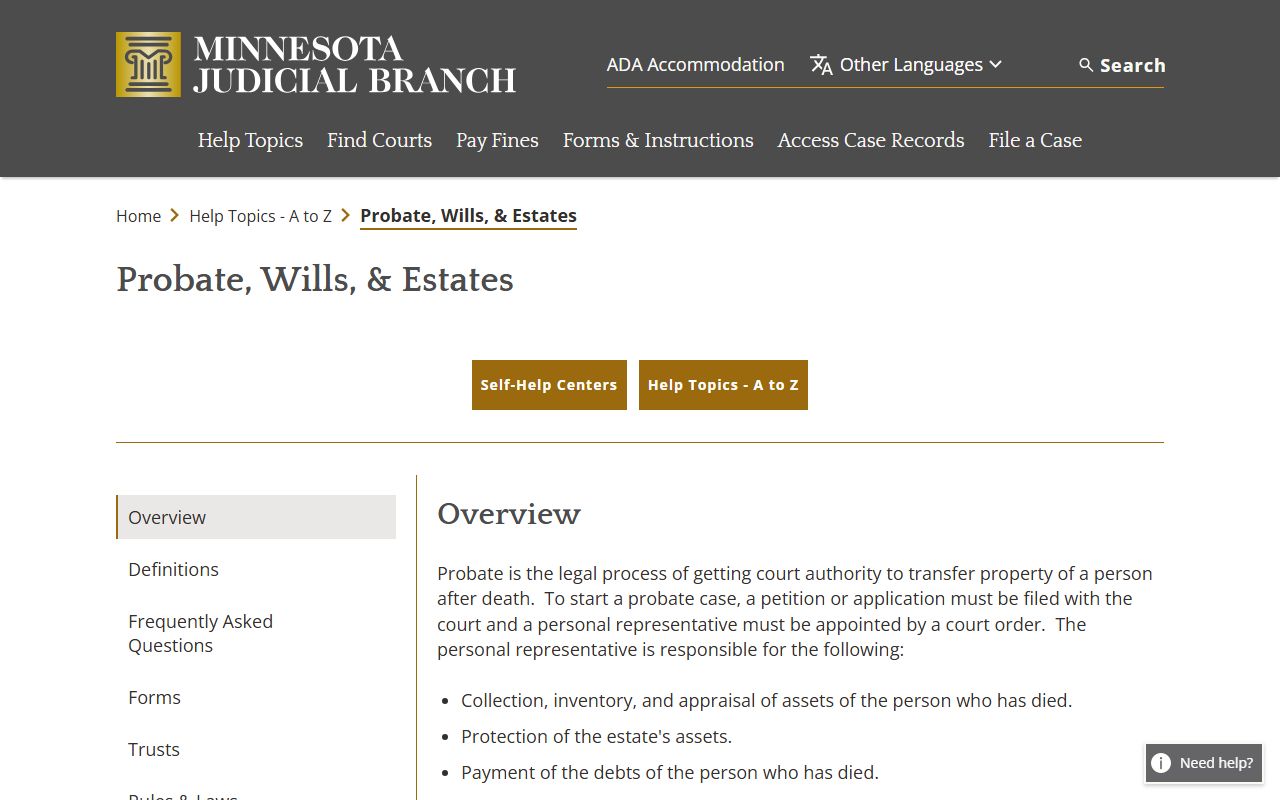
The probate help topic is the cleanest official overview of what the court means by probate and why it is tied to District Court authority.
| Probate feature | Winona County meaning |
|---|---|
| Case type | District Court probate matter, usually shown as PR in public case search. |
| Core role | Authorize transfer of property after death and appoint a personal representative when needed. |
| Common subjects | Wills, estates, guardianships, conservatorships, and trusts. |
| Best lookup tool | MCRO case search or court administration for certified copies. |
When Probate May Not Be Necessary
Probate uses its own vocabulary, and the terms matter because they tell you who may act for the estate and what kind of filing the court expects. The exact labels change by case, but the basic ideas stay the same: a will can name a person to manage the estate, the court can appoint a representative if no will exists, and the record can include guardianship or conservatorship work when a person needs court oversight.
The probate FAQ is here: Minnesota Judicial Branch probate FAQs.
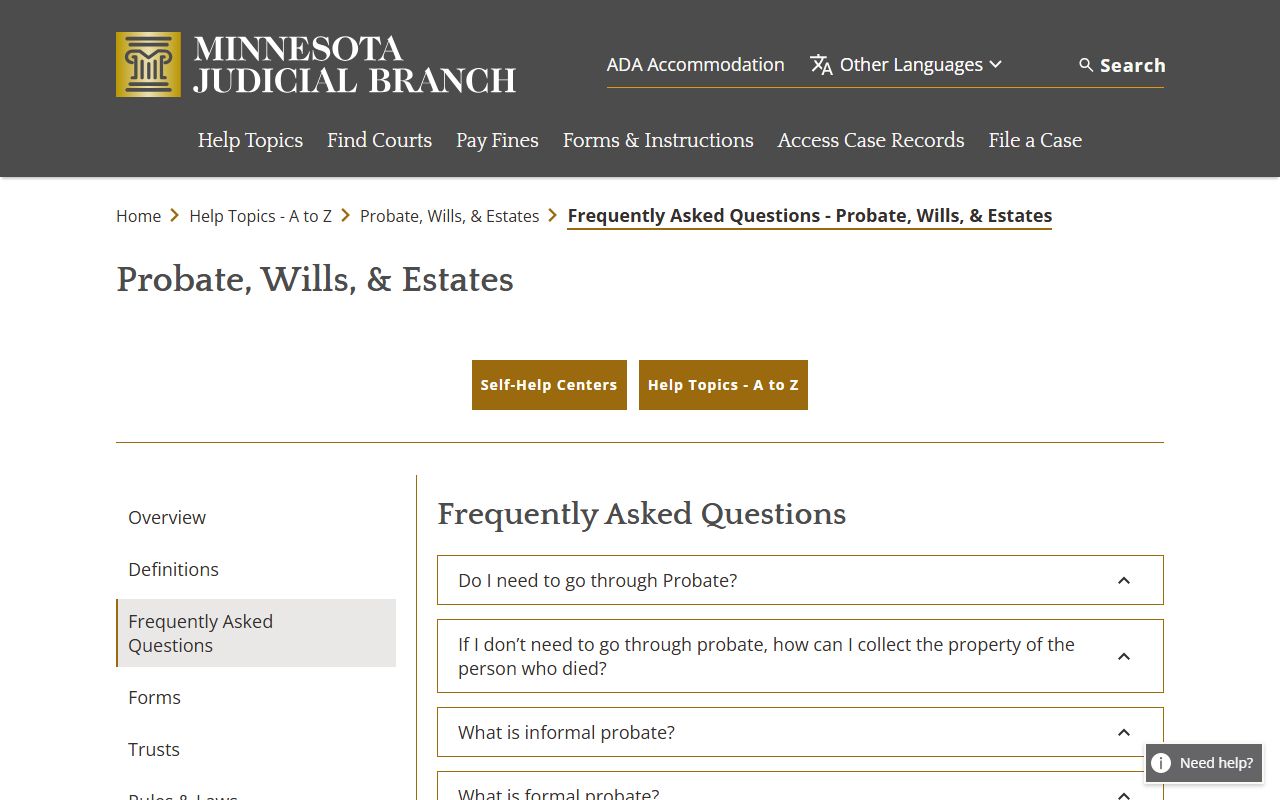
The FAQ is useful because it answers the first practical question many families ask: whether probate is needed at all.
| Asset situation | Probate result | Why it matters |
|---|---|---|
| No real estate in an individual name and no more than $75,000 of personal property in an individual name | Probate may not be necessary | The county still needs the facts, but the estate may fit a nonprobate path. |
| Real estate held in an individual name | Probate is often needed | Property transfer usually needs court authority. |
| Personal property above the $75,000 threshold | Probate is often needed | The estate is no longer in the small-estate category described in the FAQ. |
- Testator
- The person who made the will.
- Executor
- The person named in a will to carry out its instructions.
- Intestate
- Dying without a valid will.
- Personal representative
- The person appointed by the court to administer the estate.
- Formal probate
- A probate process that uses more direct court supervision.
- Informal probate
- A probate process that can move with less court involvement when the law allows it.
The Attorney General's probate handbook says Minnesota probate proceedings may be formal or informal and generally must be initiated within three years after death. That timing question matters when a family is sorting out whether to open a file now or gather more information first.
How to Search Winona County Probate Records
MCRO is the main online search path for public probate cases in Winona County. A search can start by party name or case number, and the case type will often appear as PR when the file is public. Document Search is useful when the case number is already known, while the hearing search helps when the goal is to see when a probate matter is scheduled. If the file is older or not fully digitized, Court Administration remains the office that can tell a requester what can be certified.
The probate forms page is here: Official probate forms.
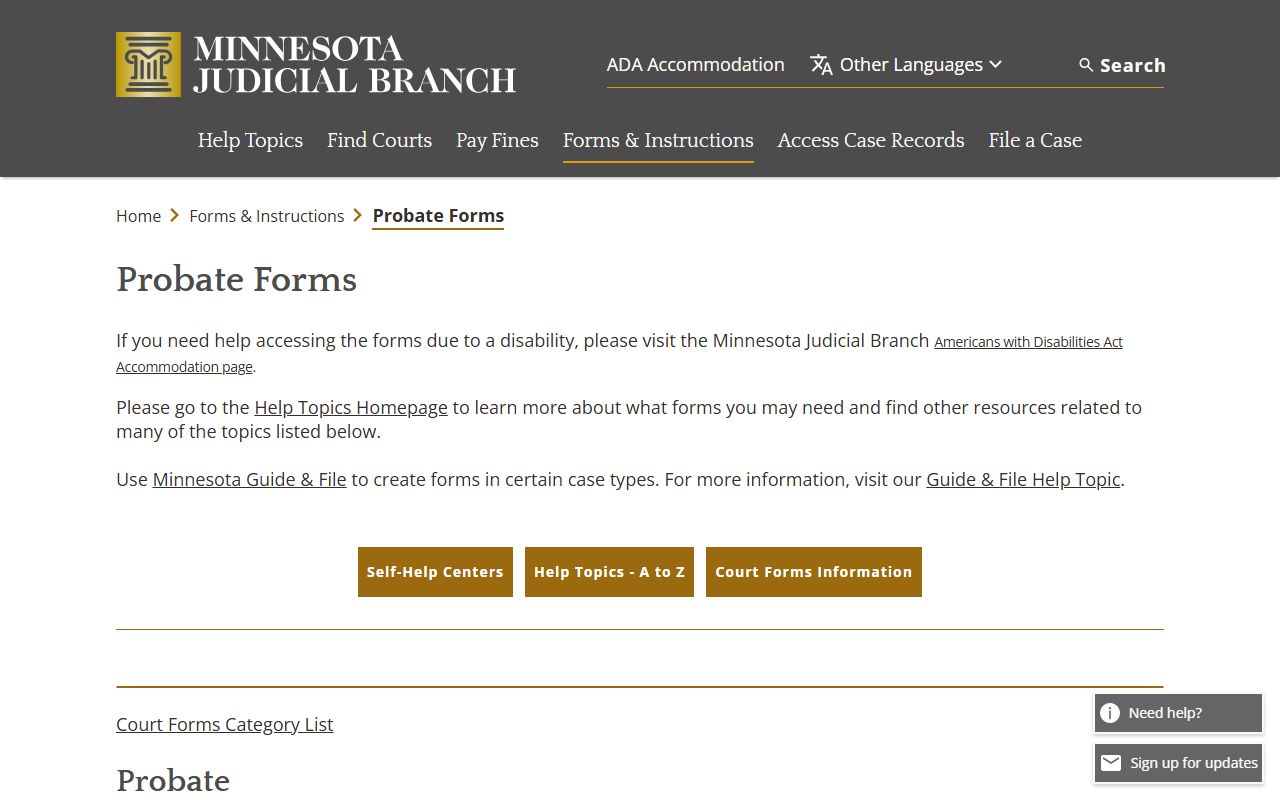
The forms page matters because it shows the paperwork route for opening a probate case, not just the lookup route for reading one.
- Start with MCRO case search using the decedent name or PR case number if it is known.
- Use Document Search or Hearing Search when the case number is already available.
- Confirm whether the case is public, restricted, or not yet fully online.
- Contact Court Administration for certified copies, older files, or safekeeping questions.
- Use the probate forms page if the goal is to open a new probate case rather than just read one.
For a broader court-record search that includes probate, the county court records page is the better starting point: Winona County court records.
Winona County Probate Records at District Court
Winona County does not have a separate local probate courthouse. Probate matters are heard in the District Court at the county courthouse, and the court administrator's office is the practical contact for case-processing questions, certified copies, and calendar issues. That is why the probate page points to District Court Administration rather than a stand-alone probate clerk.
Winona County District Court
Winona County Courthouse
171 W. Third Street
Winona, MN 55987
(507) 615-5183
Monday-Friday 8:00 a.m. to 4:30 p.m.
Probate Filing Fees
Winona County's probate fees are tied to the local District Court fee table. The first-paper filing fee for estates, trusts, guardianships, and conservatorships is $320, while will safekeeping deposit is $27. A certified copy costs $14, an exemplified and certified copy costs $28, and a trust account partial, final, or annual filing is $55. Those amounts matter because probate families often need both the opening fee and later copy fees during the same estate.
The probate fee schedule is here: Winona County District Court fees.
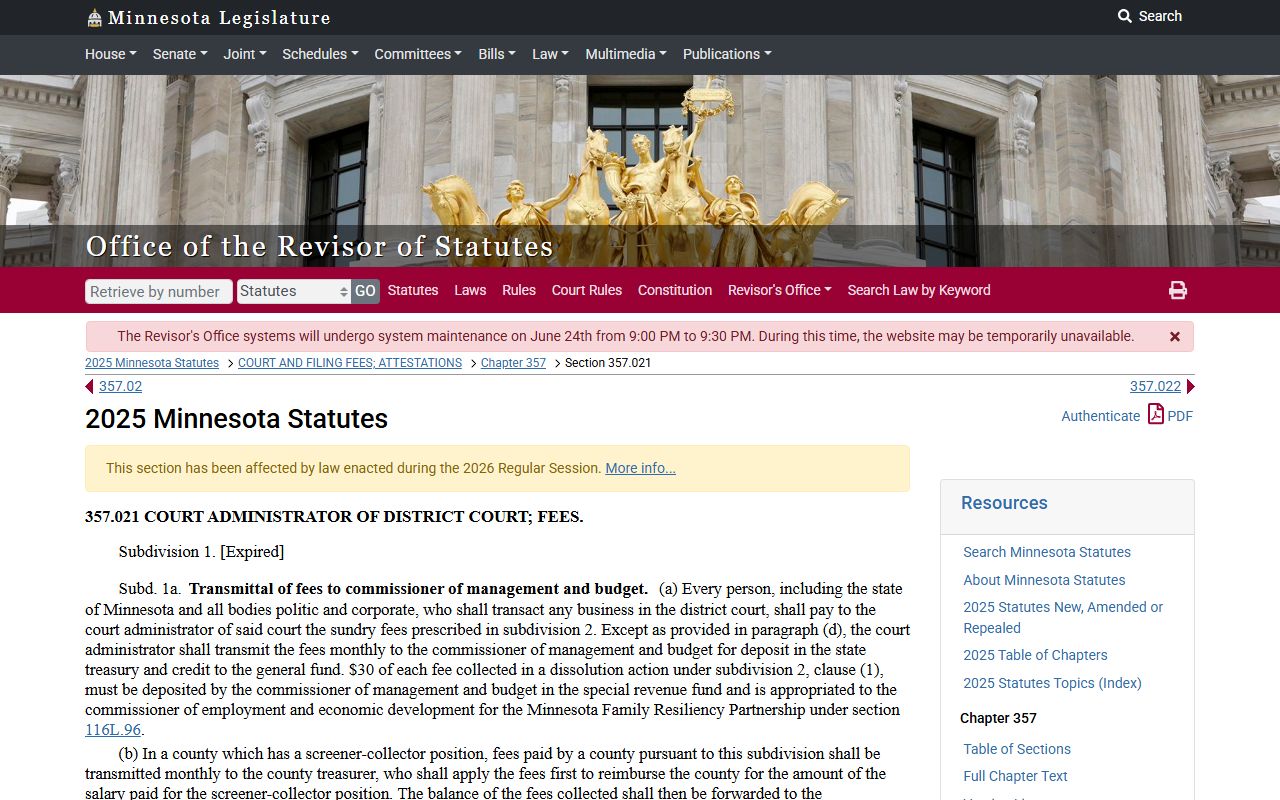
The fee table is useful because probate copy prices and the first-paper filing fee are set alongside the rest of the local District Court charges.
| Item | Amount |
|---|---|
| Deposit of wills for safekeeping | $27 |
| Estates, trusts, guardianships, conservatorships first paper filed | $320 |
| Trust account partial, final, or annual | $55 |
| Certified copy | $14 |
| Exemplified and certified copy | $28 |
| Uncertified copy viewed at courthouse MNCIS | $0 |
What Winona County Probate Records Show
Public probate files can show the will, the petition or application that opened the case, appointment papers, inventories, accountings, distributions, and closing documents. When the case is open, the court record may also show hearings, orders, and the date a personal representative was appointed. PR case numbers in MCRO are the best clue that the file belongs to probate rather than to ordinary civil litigation.
The probate code is here: Minnesota Uniform Probate Code.
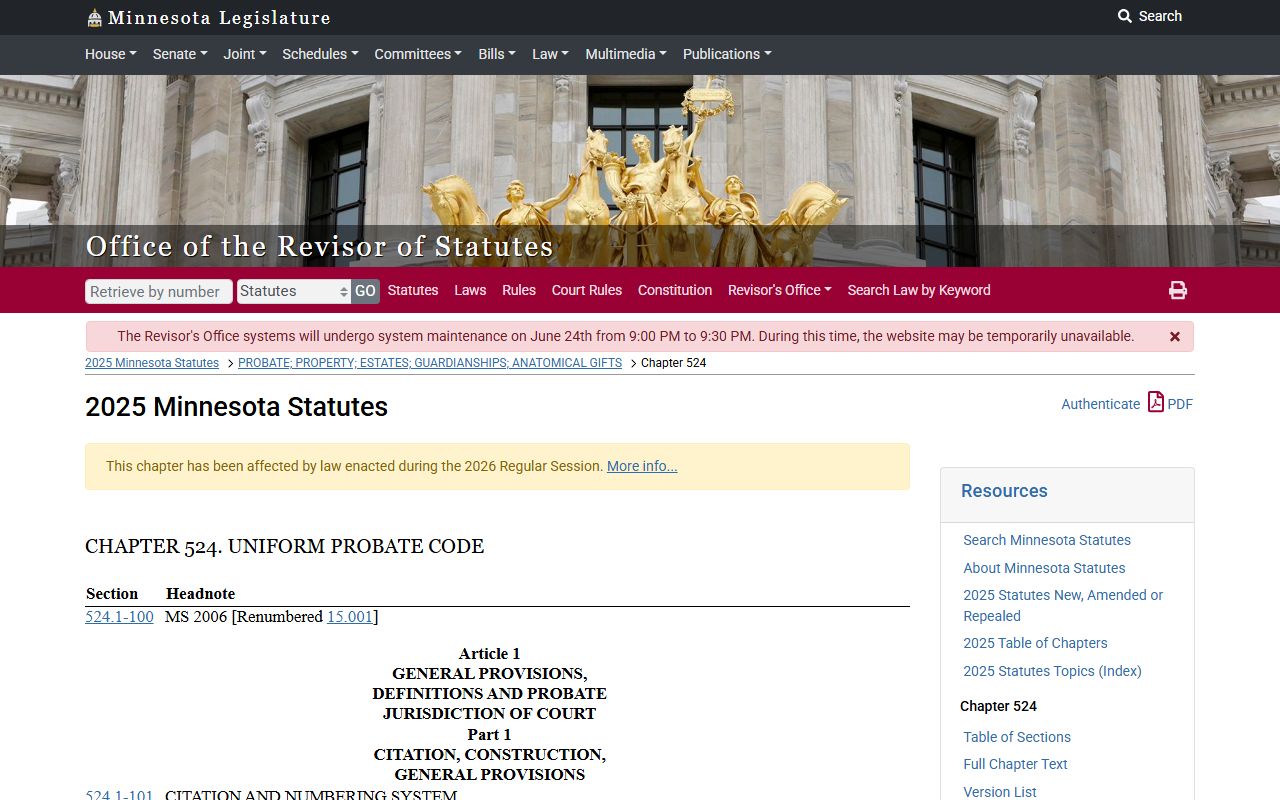
The Uniform Probate Code matters because it supplies the rule set that sits behind the county court file.
| Document or event | What it tells the reader |
|---|---|
| Will or petition | How the probate case opened and who asked the court for authority. |
| Order appointing personal representative | Who the court allowed to administer the estate. |
| Inventory and accountings | What assets were found and how they were handled. |
| Closing documents | How the estate was distributed and when the case closed. |
| Guardianship or conservatorship filings | Whether the court had to oversee a protected person or property management. |
Some probate-related material is restricted or only partly public, especially when guardianship or conservatorship files include medical or financial information. MCRO is useful, but it is not a substitute for court administration when a family needs a certified order, an older file, or a safekeeping record.
Restricted Probate Records
Not every probate record is fully open online. Guardianship and conservatorship files may contain sensitive medical or financial material, and some documents can be sealed or limited by order. Probate access also depends on whether the record is public, whether the document is part of the public register of actions, and whether the court allows remote viewing of the specific item.
Even when probate is public, the practical rule is the same as elsewhere in District Court: online access is not the same as certified access. When a family needs a certified order, a certified will copy, or a record from a restricted file, District Court Administration remains the office to contact.
For a county search that starts online and finishes at the courthouse, MCRO and District Court Administration are the correct pair. The county does not keep probate in a separate probate clerk's office.